
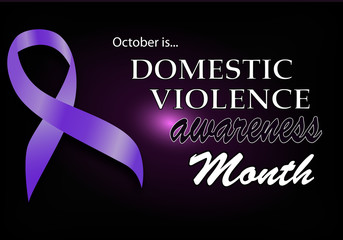
It’s purple month!
You might ask: “What’s that?”
Allow me to explain. We wear purple—actually, a purple ribbon—as a symbol used to honor victims and survivors of domestic and sexual violence/abuse. October has been designated as National Domestic Violence Awareness Month.
Domestic violence and abuse within the LGBTQ+ community is known as Intimate Partner Violence and Abuse (IPV/A). According to the National Coalition of Domestic Violence (NCDV), IPV/A is the “pattern of behavior used to establish power and control through fear and intimidation, often including the threat or use of violence, when one person believes that they are entitled to control another.” The National Coalition of Anti-Violence Programs (NCAVP) states, “It is a pattern of behaviors utilized by one partner (the abuser or batterer) to exert and maintain control over another person (the survivor or victim) where there exists an intimate, loving and dependent relationship.”
The latest research suggests that a greater percentage of LGBTQ+ individuals are living in fear of an abusive partner than previously thought. And each year, between 50,000-100,000 lesbians (or more) and as many as 500,000 (or more) gay men are battered, and about one in four LGBTQ+ relationships/partnerships are abusive in some way.
Sexual violence, stalking, and intimate partner violence and abuse are growing problems. What makes matters worse is that incidences of IPV/A often are under-reported amongst same-sex couples.
NCAVP also states the following: “In the US, more than 10 million adults experience domestic violence annually. An incident of abuse happens more frequently than every three seconds.”
The organization continues. “1 in 3 women and 1 in 4 men experience some form of intimate partner sexual violence, intimate partner physical violence, and/or intimate partner stalking during their lifetime.” And here’s a stomach-churning statistic: nearly 20 people per minute are physically abused by an intimate partner in the United States.
National Domestic Violence Awareness Month (NDVAM) evolved from the first Day of Unity, which the National Coalition Against Domestic Violence established in October 1981. The intent was to connect battered women advocates across the nation who were working to end violence against women and their children.
Soon, when a range of activities was conducted at the local, state, and national levels, the Day of Unity became a special week. These activities were as varied and diverse as the program sponsors–but had common themes: mourning those who had died because of domestic violence, celebrating those who had survived, and connecting those who worked to end violence and abuse.
Then, in October 1987, the inaugural Domestic Violence Awareness Month was observed. In that same year, the first national toll-free hotline was initiated. And in 1989, the U. S. Congress passed Public Law 101-112, designating October of that year as National Domestic Violence Awareness Month.
In October 1994, the National Coalition Against Domestic Violence, in conjunction with Ms. Magazine, created the “Remember My Name” project, a national registry to increase public awareness of deaths due to domestic violence and abuse. On October 11, 2003, the U.S. Postal Service issued its “Stop Family Violence” stamp. A young girl, who expressed her sadness about domestic violence, created the design of this first-class stamp. Profits from the sale of the stamp were transferred to the US Department of Health and Human Services to assist domestic violence programs.
Make Purple Month every month.
If you or someone you know is experiencing Intimate Partner Violence and Abuse (IPV/A), call:
- The Gay Men’s Domestic Violence Project Hotline (1-800-832-1901).
- The Gay, Lesbian, Bisexual, and Transgender National Hotline (1-888-843-4564).
- The National Domestic Violence Hotline (1-800-799-7233).
- Trans Lifeline. US: (877-565-8860). Canada: (877-330-6366).
(And always remember: In some cases, “Lovin’ You to Death” isn’t all it’s cracked up to be.)

Leave A Comment