

October Is Purple Month!
You might ask, “Oh, yeah? Really? Well, what the heck is that all about?”
Let me explain. You see, we wear purple—actually, a purple ribbon—as a symbol used to honor victims and survivors of domestic violence/abuse (DVA), which can include sexual violence. In the LGBTQ+ community, we refer to domestic violence and abuse as Intimate Partner Violence and Abuse (IPV/A). The U.S. has designated October as Domestic Violence Awareness Month (DVAM).
Statistics show that IPV/A occurs with a similar frequency as in heterosexual relationships. Additionally, new research suggests that a more significant percentage of LGBTQ+ individuals are living in fear of an abusive partner than previously thought. And each year, between 50,000-100,000 lesbians (or more) and as many as 500,000 (or more) Gay/SGL (same-gender-loving) men are battered, and about one in four LGBTQ+ relationships/partnerships are abusive in some way.
Sexual violence, stalking, and intimate partner violence and abuse are growing problems. What makes matters worse is that incidences of IPV/A often are under-reported amongst same-sex couples.
Let’s delve deeper into what IPV/A really is, along with its consequences and ramifications.
The National Coalition Against Domestic Violence (NCADV) states, “It is a pattern of behaviors utilized by one partner (the abuser or batterer) to exert and maintain control over another person (the survivor or victim) where there exists an intimate, loving, and dependent relationship. It is used to establish power and control through fear and intimidation, often including the threat or use of violence, when one person believes that they are entitled to control another.”
According to the NCADV, 26% of gay/SGL men, or 1 in 4, have experienced rape, physical violence, and/or stalking by an intimate partner during their lifetime. For bisexual men, the figure rises to 37.3%—more than 1 in 3. This directly challenges the misconception that intimate-partner violence is primarily a problem affecting heterosexual women.
The organization also states that gay and bisexual men experience abuse in intimate relationships at a rate of approximately 2 in 5. The organization’s materials also highlight the intersection of race and LGBTQ+ IPV/A: Black/African American LGBTQ+ victims are more likely to experience physical intimate-partner violence.
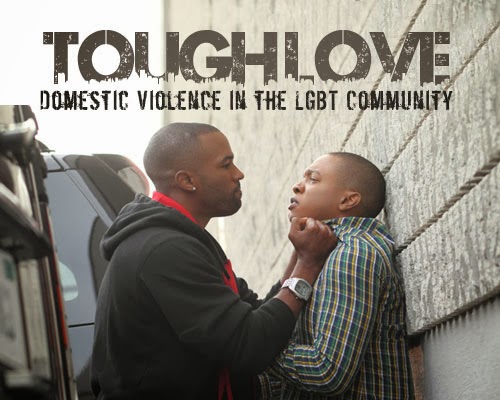
Meanwhile, underreporting is a major issue. The NCADV specifically notes that LGBTQ+ domestic violence is vastly underreported and underacknowledged, and that abuse may be reported as something other than domestic violence. It identifies fear of discrimination or bias from police, courts, and other systems as one barrier to seeking assistance.
Among lesbian women experiencing IPV/A, the figure is 43.8%, while among bisexual women it reaches 61.1%.
And very high levels of intimate-partner violence occur amongst transgender individuals:
- Transgender individuals are almost twice as likely to experience threats and intimidation in abusive relationships.
- Are particularly vulnerable to harassment based on their transgender identity by an abusive partner.
- Are more likely to suffer injuries and require medical attention due to IPV/A.
So, in recognition of Domestic Violence Awareness Month, I want to share with you how this observance came to be.
And how it has grown.
DVAM evolved from the first Day of Unity, which the NCADV established in October 1981. The intent was to connect battered women advocates across the nation who were working to end violence against women and their children.
Soon, when various activities were conducted at the local, state, and national levels, the Day of Unity became a memorable week. These activities were as varied and diverse as the program sponsors–but had common themes: mourning those who had died because of domestic violence, celebrating those who had survived, and connecting those who worked to end violence and abuse.
Then, in October 1987, the inaugural Domestic Violence Awareness Month was observed. In that same year, the first national toll-free hotline was initiated. And in 1989, the U. S. Congress passed Public Law 101-112, designating October of that year as National Domestic Violence Awareness Month.

In October 1994, the NCADV, in conjunction with Ms. Magazine, created the “Remember My Name” project, a national registry to increase public awareness of deaths due to domestic violence and abuse. On October 11, 2003, the U.S. Postal Service issued its “Stop Family Violence” stamp. A young girl, who expressed her sadness about domestic violence, created the design of this first-class stamp. Profits from the stamp sale were transferred to the U.S. Department of Health and Human Services to assist domestic violence programs.
I’ve made it my ongoing–and fervent–mission to continue to shine a bright light on IPV/A, a hellish and potentially life-threatening cycle of dysfunctional behavior. This entire month, and every month…
We Must RISE UP…And Tell Someone! Anyone Who Will Listen. We must make our “Great Escape.”
And always remember: the most potent weapon the abuser has in their arsenal is…SILENCE.
If you or someone you know is experiencing IPV/A, call The National Domestic Violence Hotline (1-800-799-7233), the Network La Red/Gay Men’s Domestic Violence Project (1-800-832-1901), the Trans Lifeline Hotline (U.S., 877-565-8860; Canada, 877-330-6366).
I have a special IPV/A section right here at Wyattevans.com that includes resources to assist victims. Check it out.
The time is NOW to break the cycle!



Leave A Comment